About this haldi
Curcuma caesia is a perennial herb native to India, found naturally in the north-east, West Bengal, Odisha, Madhya Pradesh and Chhattisgarh. It is a close relative of common turmeric but looks and smells completely different.
Because of high demand for its rhizome, it has been heavily collected from the wild, and several Indian studies describe it as threatened in its natural habitat. Cultivating it on farms is the sustainable way to keep it available.
How to identify it
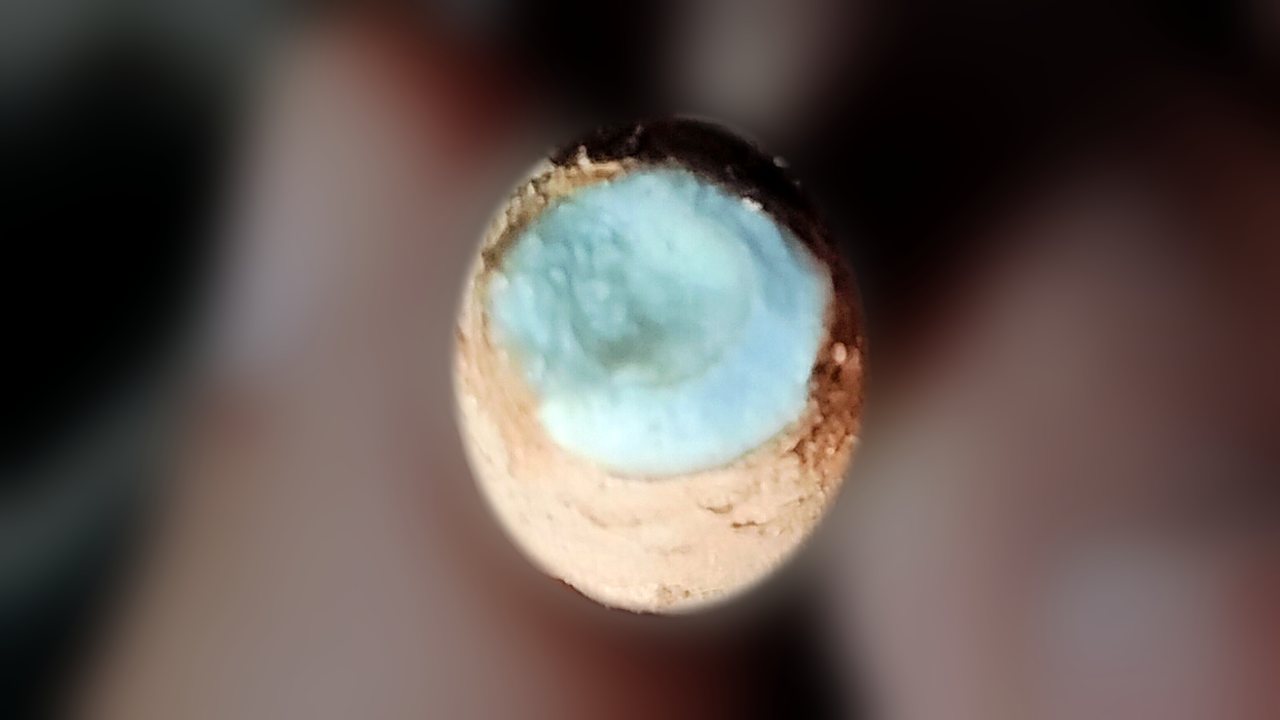
- Inside: the cut rhizome shows a bluish-black, blue-green or violet core — the colour deepens as it is exposed to air.
- Smell: strong camphor-like aroma when cut or scratched.
- Leaves: the living plant usually has a dark purple-brown band along the middle of each leaf.
- Taste: bitter and pungent — not a cooking spice like yellow haldi.
What's inside
Kaali haldi is known for its essential oil rather than its colour. Published studies report camphor, ar-turmerone, 1,8-cineole and ar-curcumene among its main aromatic compounds, which explain its sharp camphor smell.
Its curcumin content is low compared to yellow turmeric — this is natural for the plant. We publish our lab result anyway, in our curcumin results.
Traditional use
Kaali haldi has a long place in folk and tribal practice in India. It has traditionally been applied as a paste, and in parts of India it is associated with worship of Goddess Kali, especially around Kali Puja. It is generally not used as a daily cooking spice.
How we grow it
- Under poplar trees: grown in the open rows between lines of poplar trees. The trees give light shade, and their fallen leaves cover the soil as a natural mulch.
- Planting: seed rhizomes planted before the monsoon, like yellow turmeric.
- Soil: well-drained, rich in organic matter; partial shade is tolerated.
- Harvest: after about 13–14 months, once the plant has fully matured.
- Seed: we keep part of each harvest as seed rhizome, so our stock comes from cultivation, not from the wild.
Storing fresh kaali haldi
- Keep whole, unwashed rhizomes in a cool, dry, airy place, away from sunlight.
- Once cut, wrap and refrigerate; use within a few weeks.
- Do not store in closed plastic while damp — it will rot.
Storage & buying tips
- Fresh is seasonal: raw haldi is harvested once a year and is best used within a few weeks of harvest.
- Avoid shiny, bright rhizomes: polishing and colouring are used to make old turmeric look fresh. Ours is only washed.
- Ask for the lab report: a seller who tests should be happy to show it.
References
- Spices Board India, Ministry of Commerce & Industry — turmeric crop information.
- ICAR – Indian Institute of Spices Research (IISR), Kozhikode — turmeric cultivation practices.
- The Ayurvedic Pharmacopoeia of India — monograph on Haridra.
- Peer-reviewed studies on Curcuma species, including essential-oil and curcuminoid analyses.
This page shares general and traditional knowledge for education. It is not medical advice. Please consult a qualified practitioner before using any herb for health purposes.