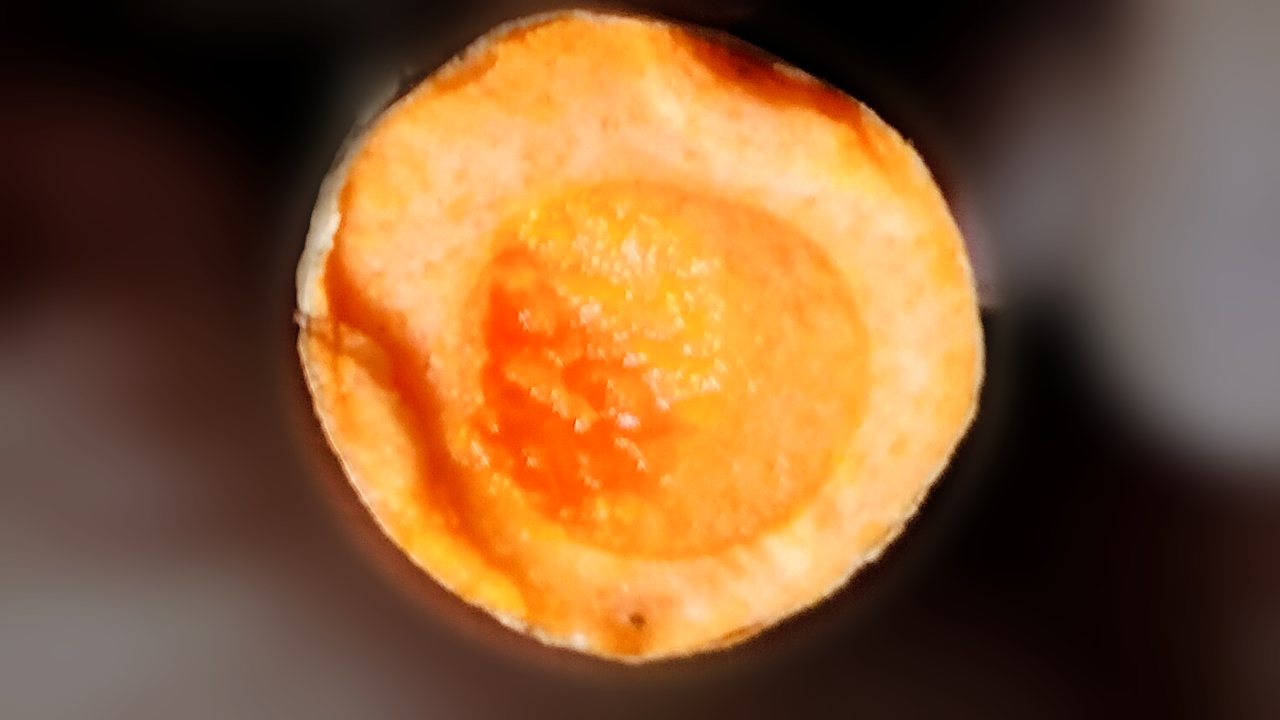
About this haldi
Despite its name, mango ginger is neither mango nor ginger — it is a Curcuma, a cousin of turmeric. Its Sanskrit name, Amragandhi haridra, means “turmeric with the smell of mango”, which is exactly what you notice when you cut it.
It grows across India and is a favourite winter ingredient in North Indian, Gujarati and Bengali kitchens, where it is sold fresh in markets during the season.
How to identify it
- Look: similar to ginger from outside — knobby, light brown skin.
- Inside: pale cream to light yellow — much lighter than turmeric.
- Smell: unmistakable raw-mango aroma when cut. If it doesn't smell of mango, it isn't amba haldi.
- Taste: mildly tangy and slightly bitter, without ginger's heat.
What's inside
Amba haldi's mango smell comes from its essential oil; studies attribute it to aromatic compounds such as car-3-ene and ocimene — some of the same compounds found in raw mango.
It contains much less curcumin than yellow turmeric, which is why its flesh is pale. This is natural for the variety. Our lab result is in our curcumin results.
Traditional use
In Ayurveda it is described as Amragandhi haridra. In the kitchen it is mostly eaten fresh rather than dried: grated into salads, ground into chutneys, and, most famously, made into a quick winter pickle.
Quick amba haldi pickle
- Wash, peel and cut 250 g amba haldi into thin sticks or slices.
- Add salt to taste and the juice of 2–3 lemons. Optional: green chilli slices and a little mustard powder.
- Mix, fill into a clean dry glass jar and keep 1–2 days. Refrigerate and use within 2–3 weeks.
The same recipe works with a mix of amba haldi and yellow Pahadi haldi.
How we grow it
- Under poplar trees: grown in the open rows between lines of poplar trees. The trees give light shade, and their fallen leaves cover the soil as a natural mulch.
- Planting: seed rhizomes planted before the monsoon.
- Soil: well-drained loam with plenty of organic matter.
- Harvest: after about 13–14 months, once the plant has fully matured. It is best eaten fresh, soon after harvest.
- Storage: keep in a paper bag in the fridge for 2–3 weeks.
Storage & buying tips
- Fresh is seasonal: raw haldi is harvested once a year and is best used within a few weeks of harvest.
- Avoid shiny, bright rhizomes: polishing and colouring are used to make old turmeric look fresh. Ours is only washed.
- Ask for the lab report: a seller who tests should be happy to show it.
References
- Spices Board India, Ministry of Commerce & Industry — turmeric crop information.
- ICAR – Indian Institute of Spices Research (IISR), Kozhikode — turmeric cultivation practices.
- The Ayurvedic Pharmacopoeia of India — monograph on Haridra.
- Peer-reviewed studies on Curcuma species, including essential-oil and curcuminoid analyses.
This page shares general and traditional knowledge for education. It is not medical advice. Please consult a qualified practitioner before using any herb for health purposes.