द्रोणमूल · Honest roots, lab-tested

Four haldis.
Grown by us. Tested for you.

We grow Uttarakhand Pahadi haldi, Kaali haldi, Amba haldi and Lakadong-variety turmeric on our farms in Uttarakhand, in and around Dehradun. All four varieties are lab-tested for curcumin, and we publish the reports.

🌱

Farm-grown

Grown by us, not bought from traders.

🔬

Lab-tested

Curcumin lab report published for every variety.

🚫

No chemicals

No chemical fertiliser, no colour, no polish.

🤝

No middlemen

From our farm, packed and sent by us.

Founder in the turmeric field, Dehradun

Our story

Why “Dronamool”?

Dehradun has long been called Dronanagari — the land of Guru Dronacharya. Uttarakhand is also home to Dronagiri, the mountain that, in the Ramayana, gave the world the legend of the Sanjeevani herb.

Mool means root. Turmeric, ashwagandha and shatavari — the herbs we grow and plan to grow — are all roots. So we chose a name that joins the two: roots from Drona's land.

Dronamool started as one farmer growing four kinds of haldi on farms in and around Dehradun, Uttarakhand, and lab-testing each variety to know exactly what it holds. We share what we grow, how we grow it, and what the lab says — so you never have to guess.

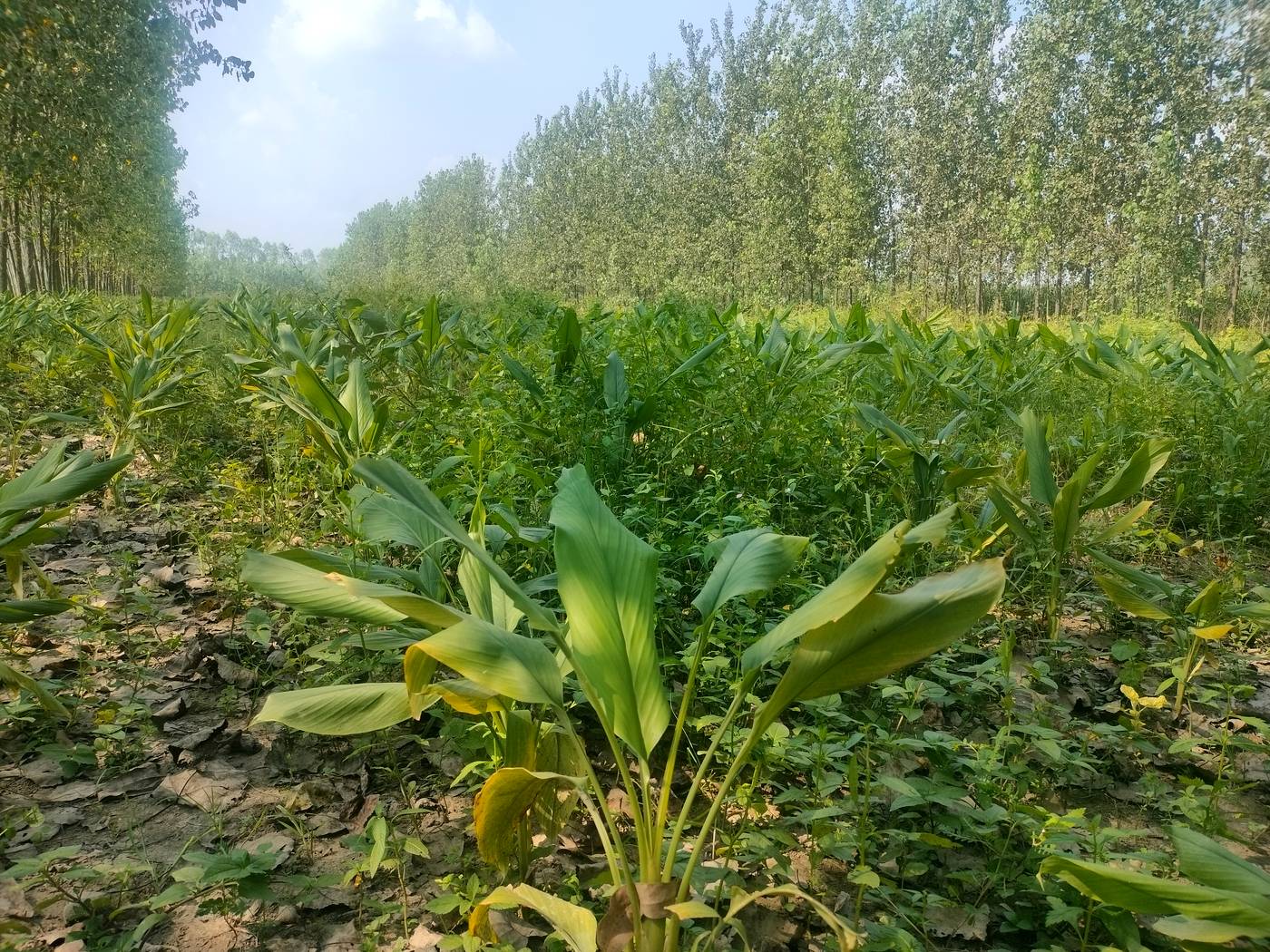
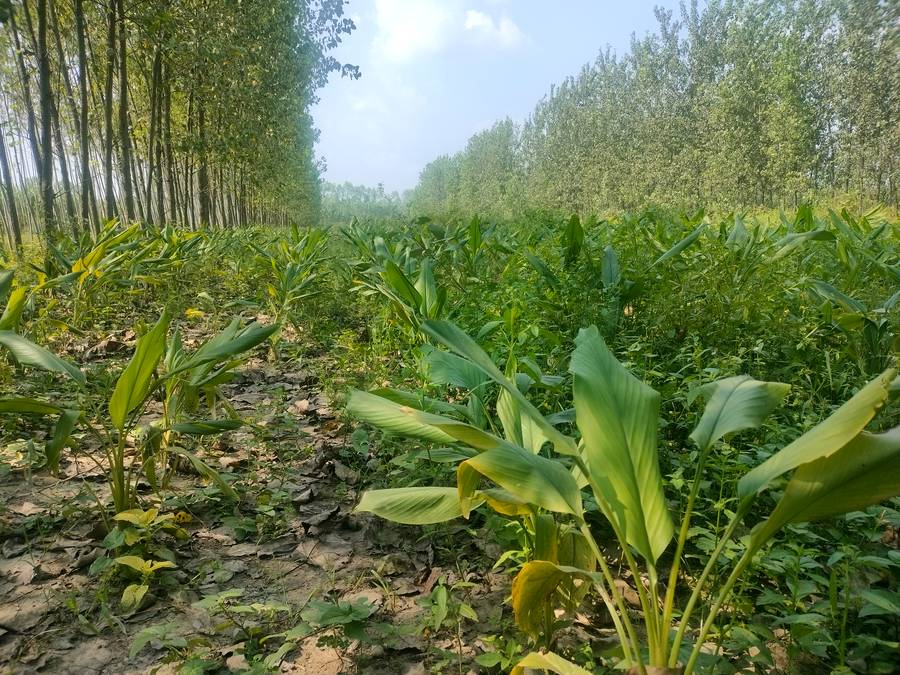
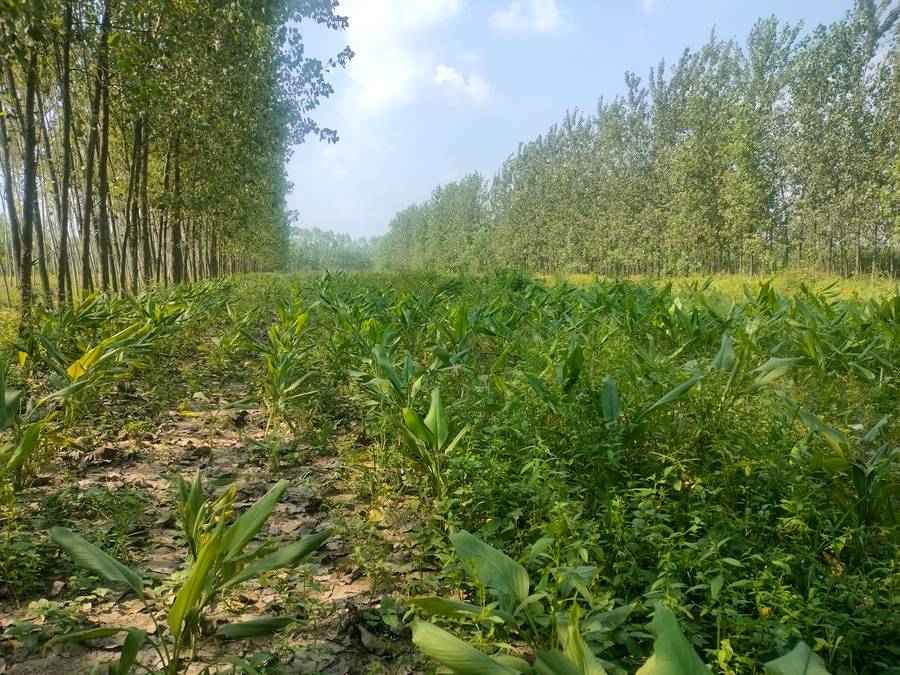
On our farm, haldi grows in the open rows between lines of tall poplar trees. The poplars give the plants light shade through the hottest months, and their fallen leaves cover the soil as a natural mulch — keeping it moist, cool and rich, the way a forest floor stays. This is how we choose to grow.

Coming next: Ashwagandha & Shatavari.

Literature

Know your haldi

Not all turmeric is the same. Here is what makes each of our four varieties different.

Uttarakhand Pahadi haldi rhizomes

Uttarakhand Pahadi Haldi

Curcuma longa · local hill landrace

The traditional turmeric of Kumaon and Garhwal, grown with little or no chemical input. Slow growth in the cooler hill climate gives firm rhizomes with a deep earthy aroma and bright yellow-orange flesh.

  • Colour Deep yellow-orange
  • Aroma Earthy, warm
  • Common use Daily cooking, haldi doodh
  • Origin Our farms, Uttarakhand (near Dehradun)
Read complete literature →
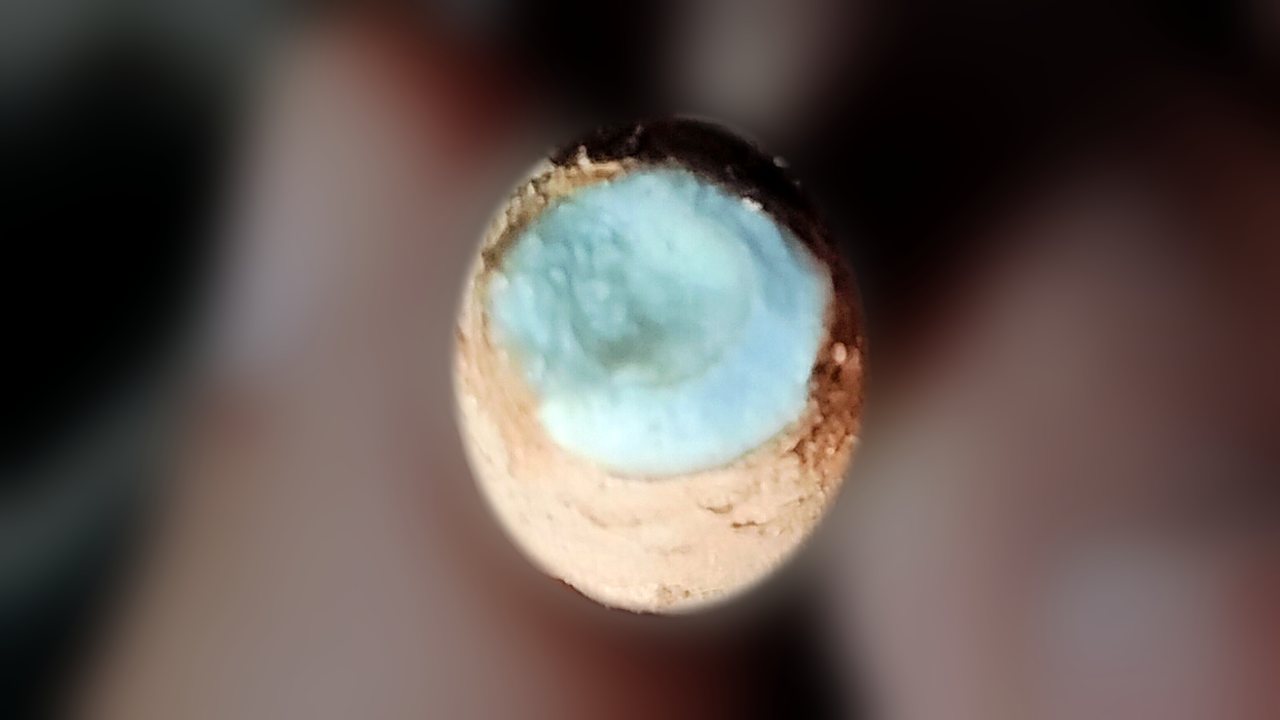
Kaali haldi (black turmeric) cut rhizome from our farm

Kaali Haldi (Black Turmeric)

Curcuma caesia

A rare turmeric whose cut rhizome shows a striking bluish-black to purple core with a strong camphor-like smell. Traditionally valued in folk and Ayurvedic practice. It has become scarce in the wild due to over-harvesting, which is why we cultivate it.

  • Colour Bluish-black / violet core
  • Aroma Camphor, pungent
  • Common use Traditional preparations, external paste
  • Origin Our farms, Uttarakhand (near Dehradun)
Read complete literature →
Amba haldi (mango ginger) cut rhizome from our farm

Amba Haldi (Mango Ginger)

Curcuma amada

Looks like ginger, smells like raw mango. Amba haldi has pale cream-yellow flesh and a fresh, tangy aroma. It is mostly eaten fresh — in pickles, chutneys and salads — rather than dried into powder.

  • Colour Pale cream-yellow
  • Aroma Raw mango, fresh
  • Common use Pickles, chutney, salads
  • Origin Our farms, Uttarakhand (near Dehradun)
Read complete literature →
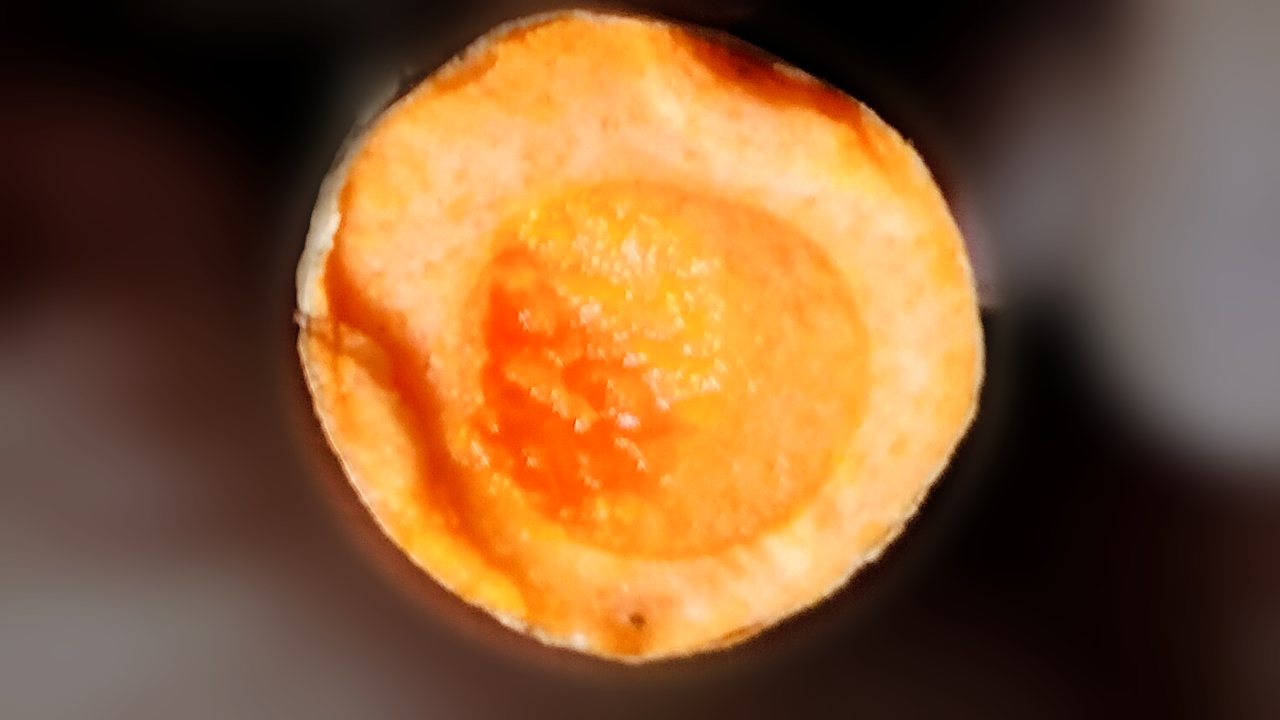
Lakadong-variety turmeric with deep orange flesh

Lakadong-Variety Haldi

Curcuma longa · Lakadong cultivar

Originally from Lakadong in the Jaintia Hills of Meghalaya, this cultivar is known in published studies for high curcumin content — often reported around 6–7%+ in its home region, compared with roughly 2–3% for common turmeric. We grow it from Lakadong seed rhizomes in Uttarakhand and will publish our own test results.

  • Colour Deep orange
  • Aroma Strong, rich
  • Common use High-curcumin cooking, powder
  • Origin Our farms, Uttarakhand (Lakadong seed)
Read complete literature →

The information above is general and traditional knowledge, shared for education. It is not medical advice. Please consult a qualified practitioner for health use.

Transparency

Curcumin test results

We send a sample of each variety to an accredited lab and publish the full report here. Whenever we plant on new land, we test again.

VarietyFarm · harvest testedCurcumin % (dry basis)Lab report
Uttarakhand Pahadi HaldiOur farm · 2026–27Testing after harvest—
Kaali HaldiOur farm · 2026–27Testing after harvest—
Amba HaldiOur farm · 2026–27Testing after harvest—
Lakadong-Variety HaldiOur farm · 2026–27Testing after harvest—

Curcumin % is measured on dried turmeric (dry basis). Fresh raw haldi contains about 70–80% water, so the same rhizome will show a lower figure if it is measured fresh. Kaali and Amba haldi are prized for their aroma and traditional use; low curcumin is natural for these varieties.

From our farm

See it growing

Real photos and videos from our fields near Dehradun — haldi growing between rows of poplar trees, with fallen leaves as natural mulch.

More videos on our YouTube channel →

Limited harvest

Pre-book your haldi

Reserve your quantity now. We will confirm price and dispatch date once the harvest is cleaned and tested. No payment needed to pre-book.

Haldi type & quantity (kg)
Form

Get in touch

Talk to us

Questions about our haldi or bulk orders? Send a short message and we will reply on WhatsApp or email.